by Michael J. Emmons, Jr., Director of Historic Preservation & Architectural Research
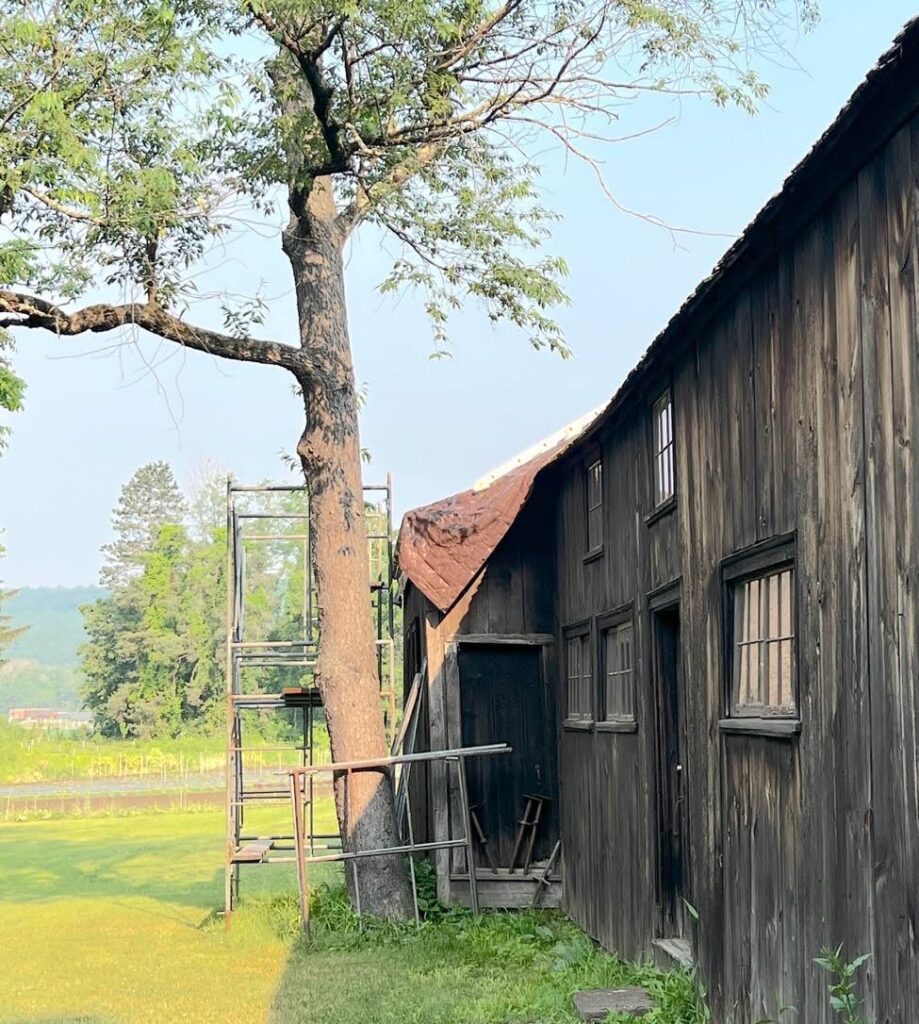
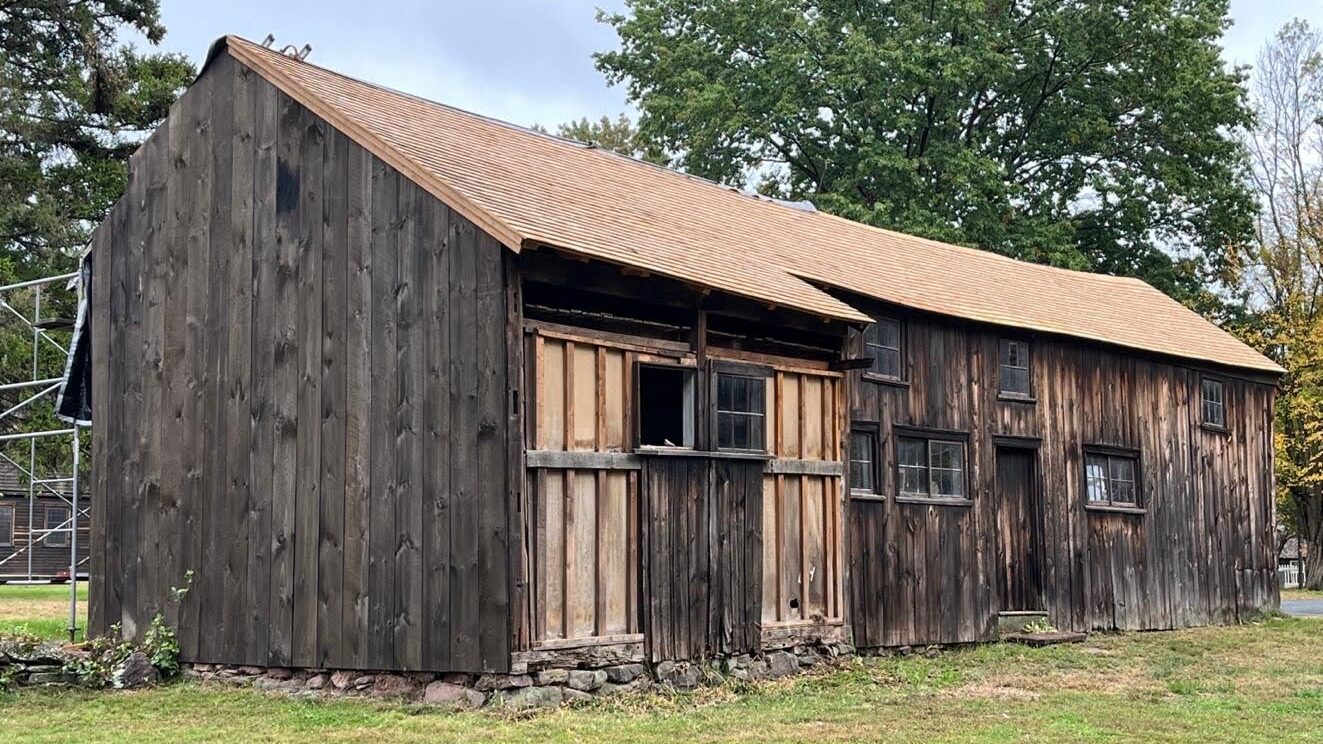
Last year, a major restoration project at Historic Deerfield ensured the continued preservation of an important agricultural building on our campus. The Sheldon Shed is the sole surviving structure from a larger barn complex that was built over the course of a century behind the Sheldon House. The barn complex once included an English style barn and several shed additions, constructed in different sections between the mid-eighteenth century and the mid-nineteenth century as the family’s agricultural needs changed over time. The Sheldons were farmers whose livelihood depended on their ability to store grains, farm implements, wagons, and a variety of animals—including horses and fattened cattle, the latter of which were penned in stalls and fed large quantities of provender (corn, peas, and oats) and hay. The Sheldon Shed is the sole surviving section of the barn complex, likely added during the nineteenth century and perhaps used as a corn crib and for storing tools and farm implements.
Last spring, it was apparent that time had taken its toll on the Sheldon Shed’s roof. As Historic Deerfield had concentrated on other important preservation projects over the previous few years, the cedar shingles of the Sheldon Shed had begun to fail and, especially in the southwest corner, the roof began to leak. Underneath that area of deteriorated wood shingles, the roof’s sheathing boards—horizontal planks that are nailed to the rafters and to which the shingles are nailed—were mostly rotten. Below them, seven large rafters (the beams which support the roof) were rotted. Furthermore, the westernmost roof plate timber, which supports the bottoms of the rafters and also ties together the vertical wall posts below, was also seriously compromised.
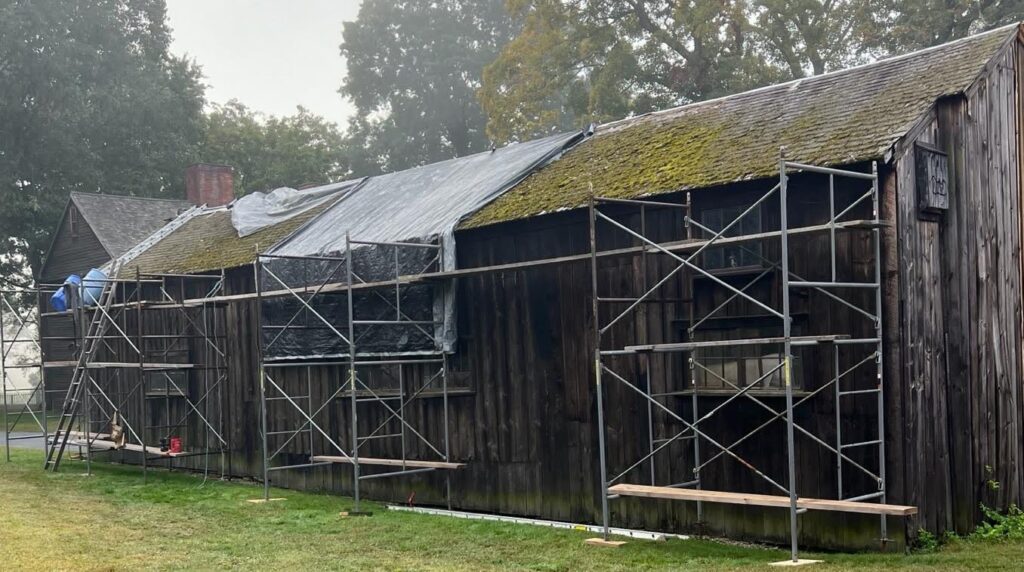
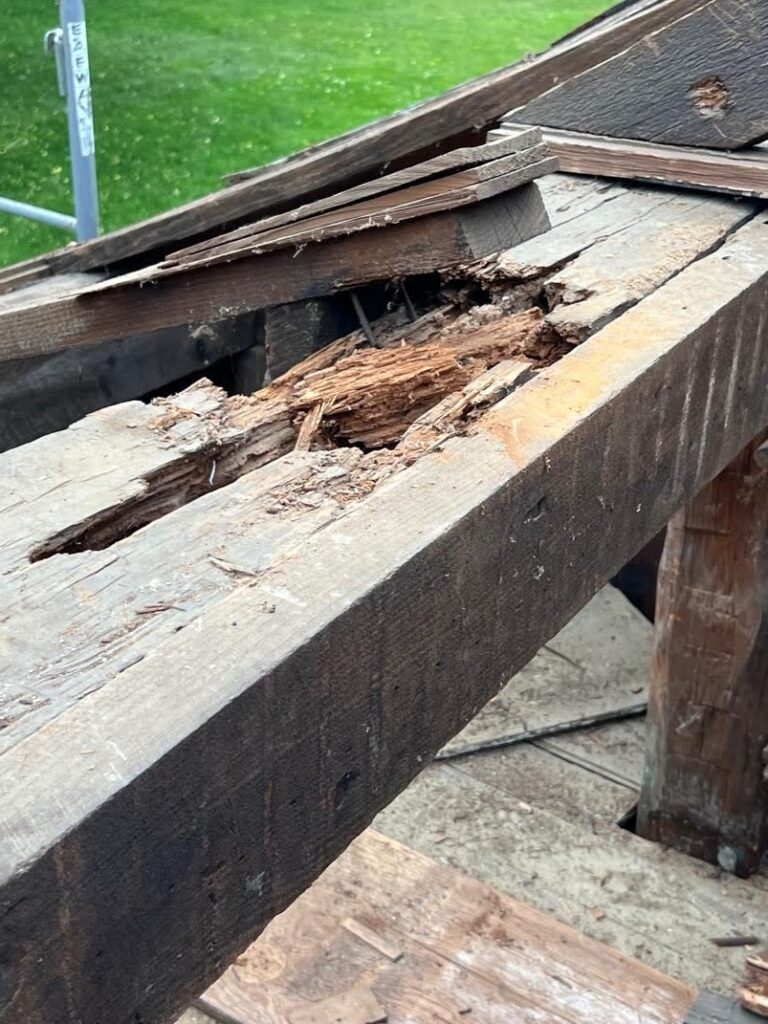
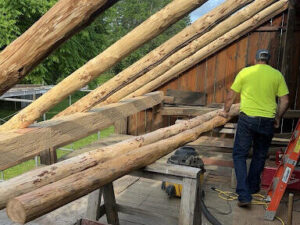
Historic Deerfield’s preservation foreman, Ernie Zuraw, led the restoration and repair work on the Sheldon Shed. The entire cedar roof was eventually replaced with Alaskan Yellow Cedar shingles, but before that work could be done, some major structural work had to occur. In the deteriorated southwestern corner, Zuraw removed the failing roof shingles and sheathing, as well as about 12 feet of the main roof plate and the seven compromised rafters. These were replaced with locally sourced Douglas fir rafters, while the roof sheathing boards were replaced with white pine planks.
Notably, during these structural repairs, the decision was made to slightly alter the roofline of the small “bump-out” extension on the south side. That roof had previously kicked out at a slightly shallower pitch, with its own short rafters. In order to incorporate that portion of the building into the main roof, the new rafters were cut to extend all the way to the outer plate (near the bottom of the roof), continuing the pitch of the main roof over the small “bump-out” section.
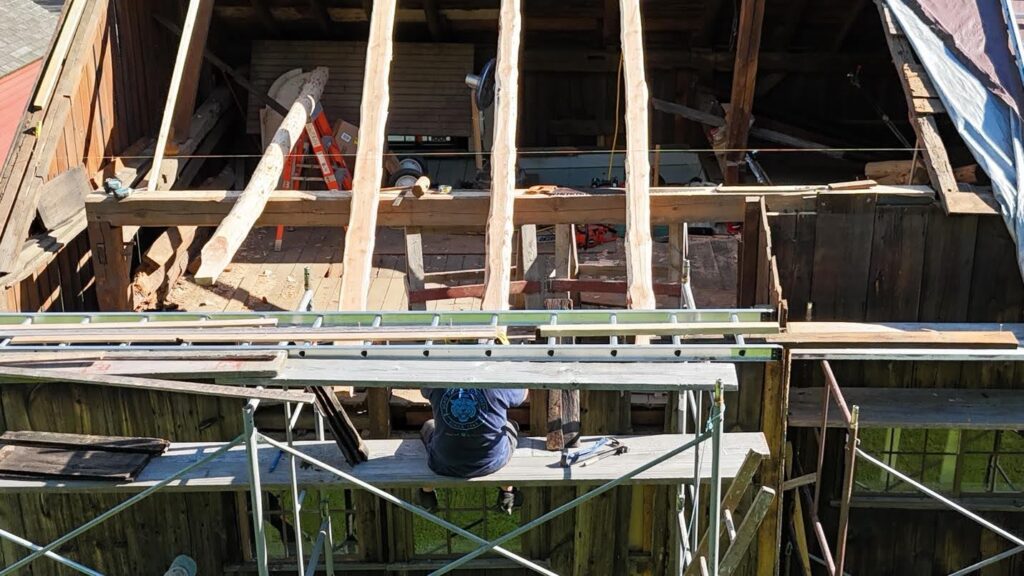
The new portion of rafter plate was joined to the surviving plate with a long lap joint (in which two pieces of wood are overlapped and fastened together). Even though the original plate is 7 inches tall, the replacement section was intentionally cut to be 8 inches. The extra inch allowed Zuraw to create a notch at the bottom of the plate, providing a “lock” that would further secure the plate to the top of the original vertical post should the building settle over time. That original, vertical wall post now tenons into a mortise (a square hole cut to receive a small tenon for a joining piece) that was cut in the bottom of the new plate. This joint is secured with the original wood pegs recovered from the previous mortise-and-tenon joint.
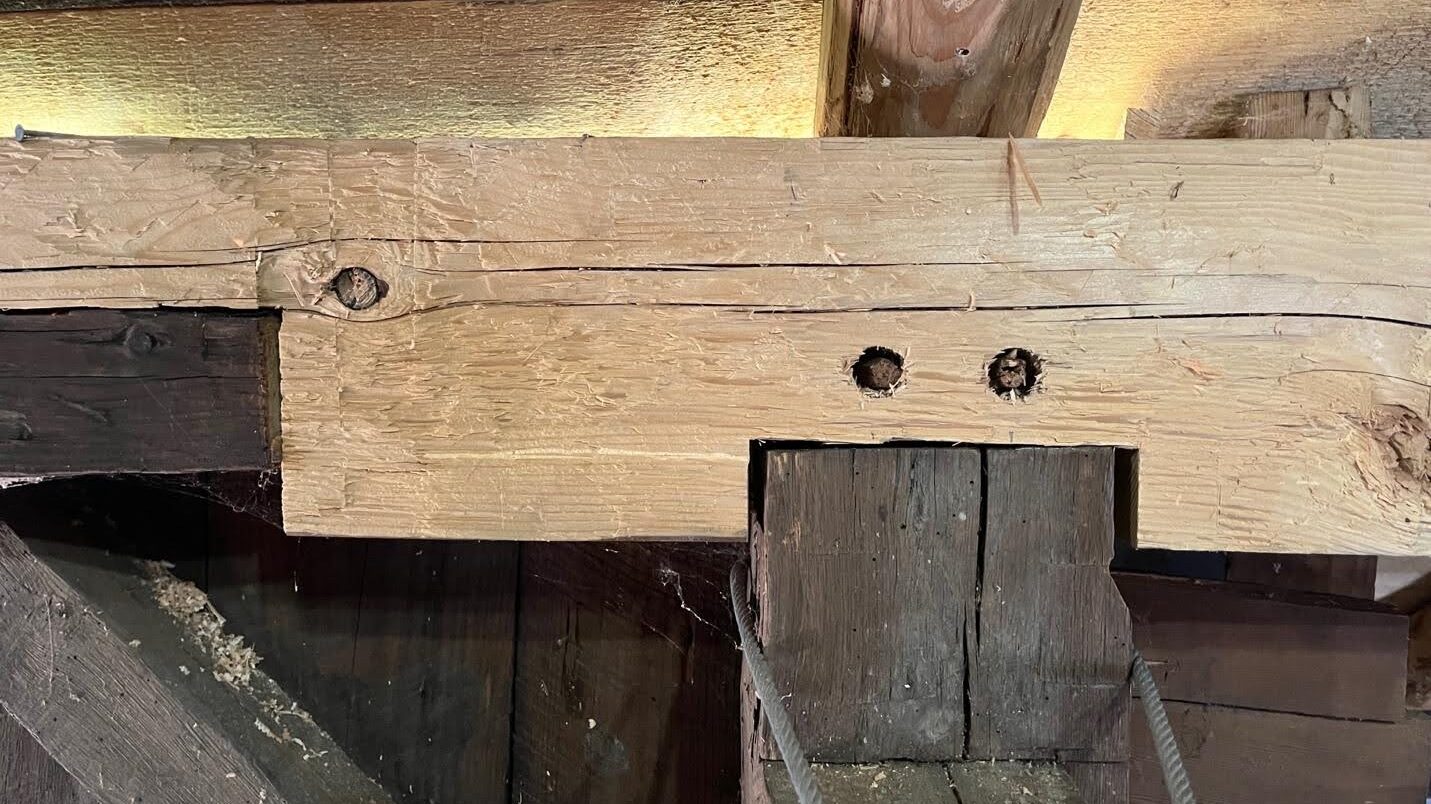
Because the west end of the building has settled over the centuries, the new section of roof plate retains a slightly downward contour. This led to a bit of a differential in the relationships of the new rafters to the new plate. Towards the eastern end of the replaced plate, the round rafters are notched (with “birdsmouth” cuts) to engage with the square plate (since their pitch forces them to intersect), while the westernmost new rafters actually pass above the new plate—and so they are shimmed and blocked underneath to fill the gap left by the sinking plate.
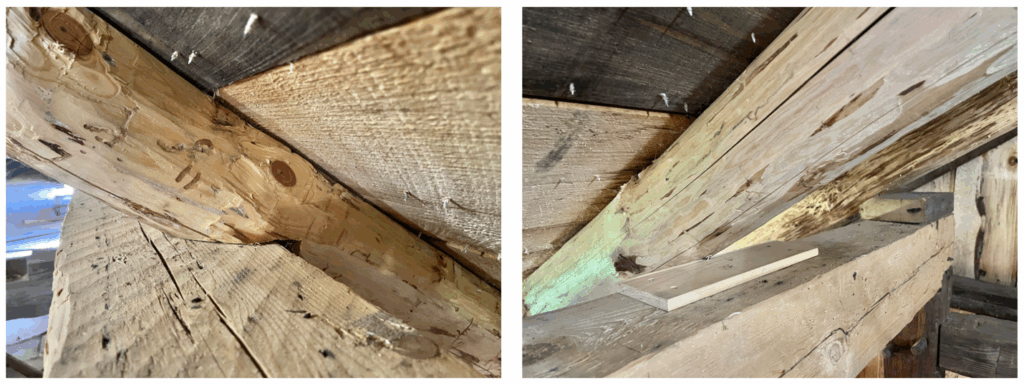
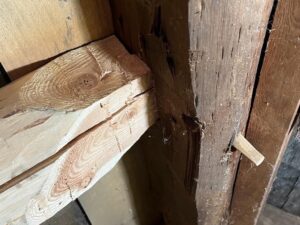
At the peak of the roof, the new rafters were joined into the original ridge pole with tenons cut to fit the existing mortises on its bottom, and those joints were secured with new pegs. At the west end of the building, a new ridge post was installed to replace a previous one.
As of October 2025, the only uncompleted work from this restoration project at the Sheldon Shed is to replace the siding on the south side of the “bump-out” addition, where it was removed during the timber framing work. The previous siding, which was removed and placed in storage, can likely be reused. However, because those boards were laid on vertically, the plan is to better secure them against the weather during reinstallation by adding an interior batten at the joints between boards, which should keep moisture away from interior framing.
This important restoration project will help preserve the Sheldon Shed for decades to come, allowing it to continue standing as a scarce visual reminder of agricultural history on The Street. Preliminary planning is now underway for a future exhibit here, which will provide visitors a fascinating glimpse into daily agricultural work in Old Deerfield.
Michael J. Emmons, Jr. is the Director of Historic Preservation & Architectural Research at Historic Deerfield.