By Gardiner Dietrich
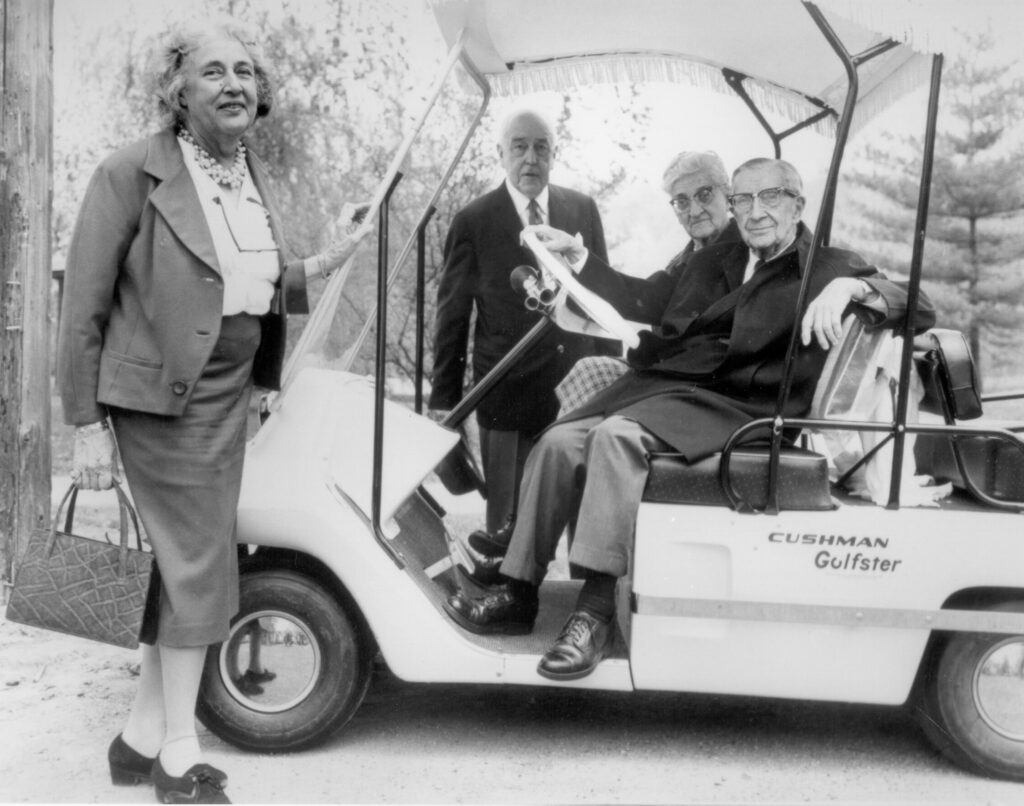
As a new student at Deerfield Academy with a strong interest in history, I was excited for the opportunity to spend my winter cocurricular conducting research at Historic Deerfield’s Henry N. Flynt Library under the guidance of librarian Jeanne Solensky. Having access to resources and photographs from the archives of Historic Deerfield allowed me to delve into the relationship between the Academy’s legendary former headmaster, Frank Learoyd Boyden, and the philanthropically-minded Henry Needham and Helen Geier Flynt.
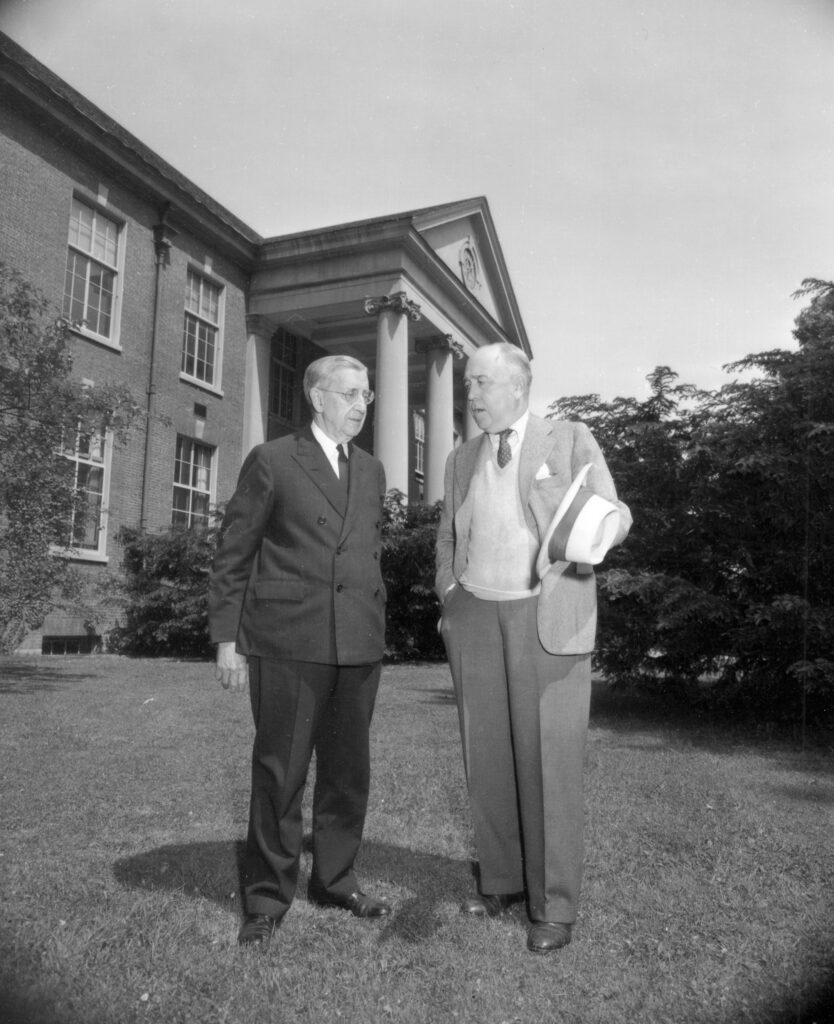
In 1902, only two months after graduating from Amherst College, Boyden was appointed headmaster of Deerfield Academy. In just two years as headmaster, Boyden increased the student body from 14 students to almost 60. He continued to recruit more students and faculty throughout his 66-year tenure as headmaster. Although Boyden won the right to keep the Academy separate from Dickinson High School in the early 1920s, he had further aspirations for the school, including greater sports facilities, a new cafeteria, and the expansion of the school’s residential holdings. Yet, he struggled to find the means of achieving them.
Henry and Helen Flynt were the perfect couple to help. When their son, Hank, began attending the Academy in 1936, the Flynts became acquainted with the school and Frank and Helen Boyden. The affluent Flynts were not only interested in the Academy, but they also had the energy to invest. Helen was first to contribute to the Academy by giving Boyden checks for faculty vacations. Other early donations included contributions to the gymnasium store and squash courts. It was around this time, Henry recounted that “Mr. Boyden’s charm and personality had begun to work.” [i] Around 1938, Boyden appointed Henry to become a trustee on the Academy board.
For the next couple of years, Henry took inspiration from institutions such as Colonial Williamsburg and Old Sturbridge Village in his plans for preserving the houses on Old Main Street. Although he was not as wealthy as John D. Rockefeller, Jr.—the primary benefactor of Williamsburg—he and Boyden consulted with several key stakeholders involved in the development of Williamsburg who encouraged them to conduct extensive research on the Deerfield buildings planned for restoration.
The Flynt’s initial Deerfield home purchases reflect their early relationship with the Boydens, when their visions were closely aligned. They first purchased a house in 1942, which was fixed up and gifted to the Academy to increase student and faculty residences. Earnest restoration work began in 1944 with the purchase of the Rossiter House, more commonly known as the Pink House. The house was furnished with antiques bought in Greenwich, Boston, and Northampton. In 1945, the Flynts rented this house to the Academy (who is now the current owner), and with it, the furniture. In a letter to Boyden discussing the terms of agreement, Henry mentions that “if any breakage or damage occurs, except for such normal wear and tear, it is understood the occupants of the premises or Deerfield Academy will be responsible.” [ii] Furniture on rent included an “Early American Pine Corner Cabinet” and an “Early American Cherry Chest of Drawers,” among others. [iii]
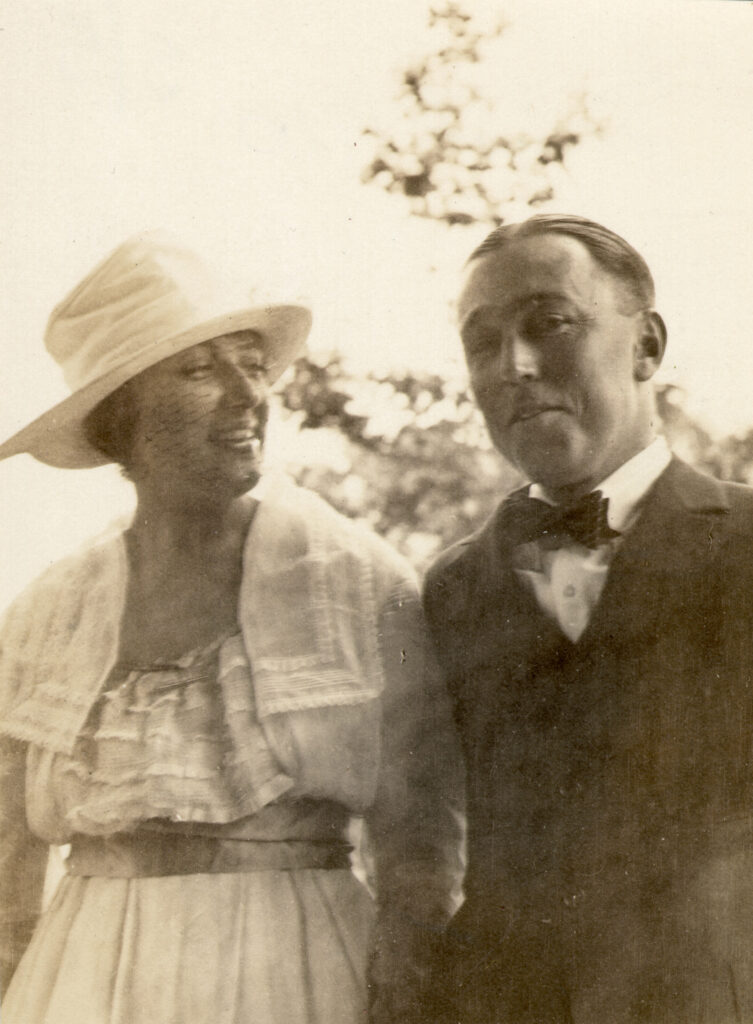
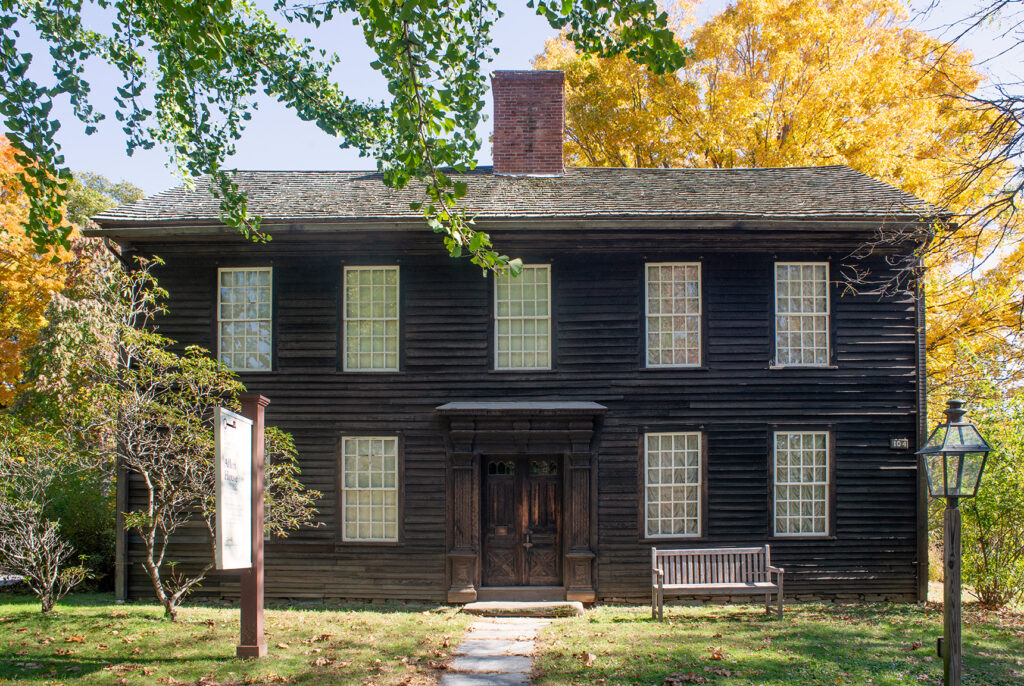
In 1945, the Flynts acquired the Deerfield Inn, Allen House, and Ashley House. The Allen House was purchased in hopes of having their own home to live in at Deerfield. When visiting, the Flynts typically stayed with the Boydens, yet after ten years of committed involvement to Deerfield, it seemed only natural to purchase their own house. Moreover, a Greenfield liquor dealer was considering buying the property. Henry noted that Boyden “felt that purchaser might not be a good influence for the Academy and its boys and we agreed.” [iv]
The first house on the Allen property was burned down during the raid of 1704. The current Allen House was built circa 1734. In 1842, the house transferred ownership to the Allen family upon Catherine Elizabeth Bardwell’s marriage to Caleb Allen. The house stayed within the Allen family until Francis E. Allen sold the house to Henry. Since much of Allen House was renovated in the nineteenth century, it was difficult for the Flynts and Bill Gass, a reputable local contractor, to determine the original layout. Even with the help of Elizabeth Fuller (a descendant of the prominent Deerfield Fuller and Williams families) and her research assistant, Jean Campbell, there was limited research and evidence to build on the earliest architectural features. As a result, the Colonial Revival interior of the house was shaped by the Flynt’s tastes. In 1975, Helen gifted Allen House to Historic Deerfield to function as a museum. All furnishings the Flynts acquired were kept in place from when the couple occupied the house from the 1940s to 1974. The house is seen as “an eclectic collectors’ collection,” [v] rather than an authentic interpretation of an eighteenth-century house.
Rev. Jonathan Ashley (1712–1780), Deerfield’s second minister, acquired the Ashley House from the Wells family in 1733. Although struggling financially, Ashley was a member of the elite Connecticut River Gods and made several interior renovations in the 1750s to match this status. In 1843, the barns behind the Ashely House were built after a devastating fire destroyed much of the property. In 1869, the colonial homestead was moved behind newer barns to be used for storing tobacco and other agricultural items. That same year, the Ashley family built a new house facing the street, valued around $1,425 at the time it was built. [vi] Descendant of Rev. Jonathan Ashley, Jonathan Porter Ashley, was unable to maintain the lot, and Boyden retrieved the Ashley farm from the Federal Land Bank in 1944 in hopes of converting the 1869 house into a dormitory or faculty residence. The house was too far from the Academy, so the Flynts moved it closer to the Academy’s central campus. The Ashley House was then moved forward to the street to be restored as a museum and once again hired Bill Gass. The colonial house opened to the public on May 4, 1948 and was the first of the Flynt’s purchased Deerfield homes to be transformed into a museum.
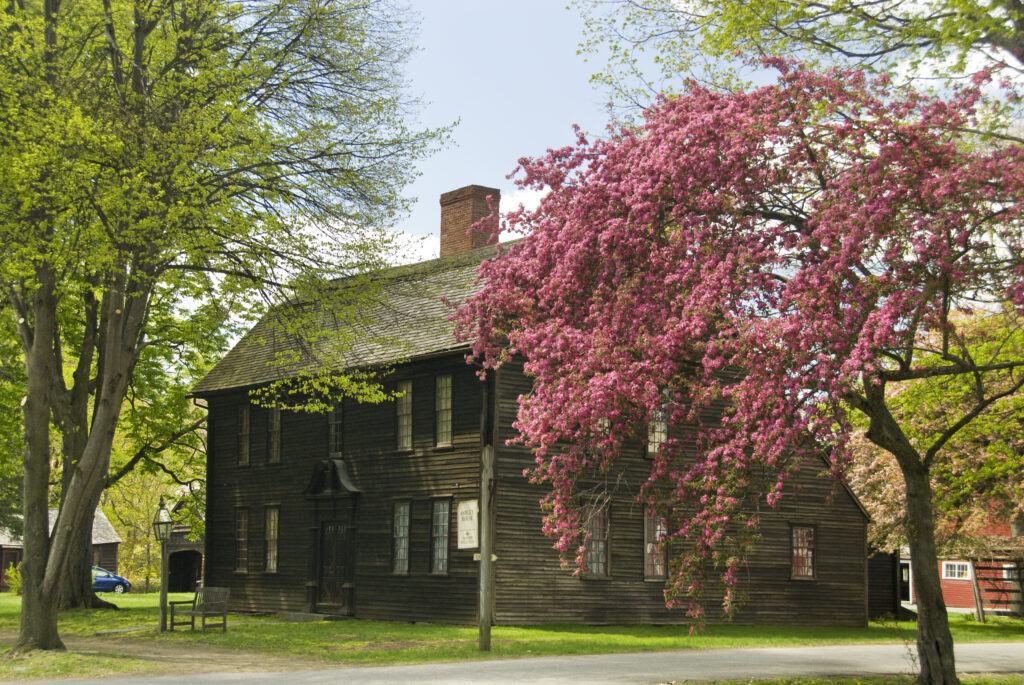
Since the Flynts were aware of resentment from Deerfielders who believed the couple was depriving them of living space by purchasing houses for the purpose of making them museums, they always built an apartment within the houses they restored as museums. Helen Childs Boyden was also noteworthy in reducing backlash from locals, as she was the daughter of an Old Deerfield farm family and introduced the Flynts to several long-time residents. In October 1967, residents expressed gratitude toward the Flynts by throwing them a gala celebration, marking their 25 years of generosity within the Deerfield community. Two years later, the Flynts were awarded with the Louise du Pont Crowninshield Award “for their efforts to preserve the historic village of Old Deerfield, Massachusetts.” [vii]
These historical houses, especially the Ashley House, represented an idealized American past, which nostalgic Americans looked toward after World War II. This was the ideal backdrop for the Academy that Boyden had envisioned. Flynt’s original plan was to create replicas of pre-1704 Deerfield houses, which were destroyed by the raid, and early eighteenth-century houses. [viii] Although Boyden’s primary motive was not preservation but to provide more dorms and faculty housing for the growing academy, he realized the value of retaining a colonial New England setting. Henry Flynt felt similar in the way that both the town and the Academy would benefit one another. In a 1952 letter from Henry to the Boydens, he emphasizes the “…Town, or at least the Old Deerfield section of it, could not get along without the Academy and in my opinion the Academy could not get along without the Town…and any attempt on the part of anybody to play one against the other is doing a great disservice to both.” [ix]
Unfortunately, many disagreements between the Boydens and the Flynts on goals and expenditures—including disputes over the Inn liquor license and Boyden’s reluctant retirement—boiled over that year, which lead Henry to write this letter articulating their grievances. Within the letter, he also stated the possibility of establishing the Heritage Foundation, now named Historic Deerfield, which was chartered later that year. Even with these disputes, there is no doubt that the Academy and Historic Deerfield have been a tremendous benefit to each other.
Gardiner Dietrich is a Deerfield Academy student, Class of 2027.
[i] Elizabeth Stillinger, Historic Deerfield: A Portrait of Early America (New York: Dutton Studio Books, 1992), 8.
[ii] Henry N. Flynt to Frank L. Boyden, January 17, 1945, Flynt Correspondence, Historic Deerfield Archives.
[iii] “Furniture for Rossiter House…from Denson & Son, Greenwich,” January 27, 1945, Flynt Correspondence, Historic Deerfield Archives.
[iv] Henry N. Flynt to Helen and Frank Boyden, June 20, 1952, Flynt Correspondence, Historic Deerfield Archives.
[v] Stillinger, 73.
[vi] Susan McGowan and Amelia F. Miller, Family & Landscape: Deerfield Homelots from 1671 (Deerfield, MA: Pocumtuck Valley Memorial Association, 1996), 5.
[vii] https://savingplaces.org/history-of-the-crowninshield-award.
[viii] Stillinger, 22.
[ix] Henry N. Flynt to Helen and Frank Boyden, June 20, 1952, Flynt Correspondence, Historic Deerfield Archives.